The Hidden Cost of Reactive Detection
High-velocity localization teams frequently fall into a reactive cycle where quality issues surface only at the final stage. This “fix it at the end” approach leads to significant cost leakage, schedule risk, and inconsistent vendor performance.
When volumes rise, the tension between speed and control becomes unsustainable. The solution is to move from reactive fixing to proactive detection embedded directly within the production workflow.
Why AI Adaptive Workflows?
By operationalizing AI-enabled workflow controls inside the TMS, we reduce rework and improve confidence through early-stage intervention:
Early Detection & Quality Control
AI-governed QA approach: A targeted QA layer used to flag sensitive or non-compliant language categories during the translation phase.
AI-driven quality scoring: Leveraging AI quality scoring to automatically evaluate every segment and route content for review. Segment-level quality estimation to surface potential issues early and support data-driven vendor management
Dynamic Orchestration
Streamline processes by leveraging AI to enhance efficiency: whether through automated routing and quality assurance based on performance signals or autonomous agents handling tasks and removing bottlenecks.
Practical, Proactive Workflow Engineering
Shifting to early issue detection reduces the downstream burden on reviewers and minimizes project risk. AI Adaptive Workflows allow teams to move beyond manual intervention, focusing instead on high-level orchestration and informed decision-making.
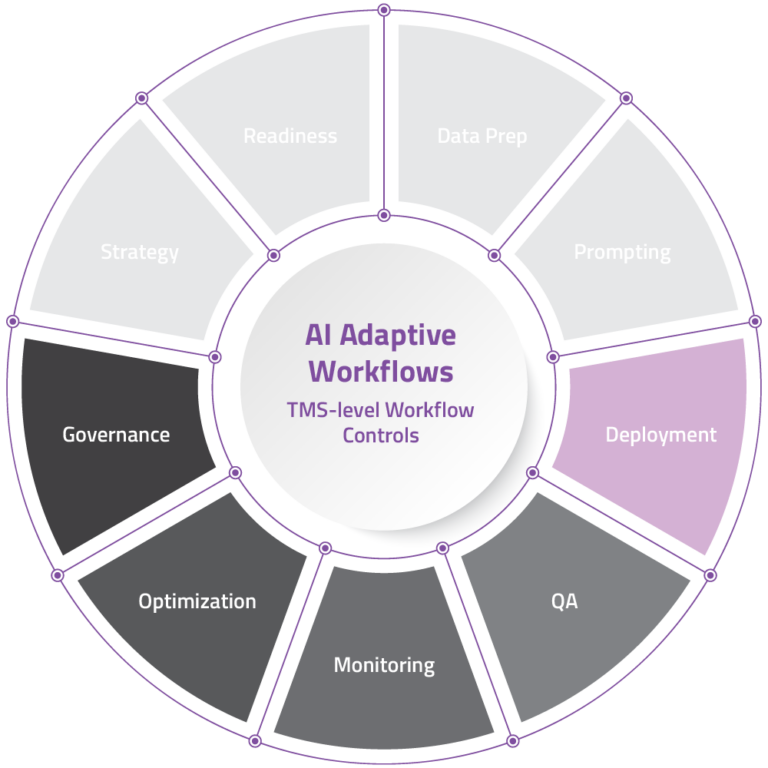
Where it fits in the AI Lifecycle